Do chickens need a rooster? The short answer is no – hens lay eggs perfectly well without a rooster (or cockerel), so whether your flock is happier with or without one comes down to your goals, your space and your neighbours. Below we cover the real questions backyard keepers ask, from egg-laying and fertility to flock harmony, crowing and the legal side of keeping a cockerel.
Do hens need a rooster to lay eggs?
No. A flock of hens does not need a rooster or cock to lay eggs – they will lay just the same whether a male is present or not. You only need a rooster if you want fertile eggs for hatching. And contrary to popular belief, keeping a cockerel will not leave you with hundreds of chicks running around.

Fertile eggs sit in a kind of stasis until conditions are right for them to develop. If you collect eggs regularly and store them somewhere cool, they simply won't hatch. And in case you were wondering, it is perfectly safe to eat fertilised eggs – they taste and look exactly the same as unfertilised ones.
Know your terminology: rooster, cock or cockerel?
First, let's get the terms straight. In the US, a mature male chicken is called a rooster, while in the UK the official term is a cock. More commonly, people say cockerel, which technically means a male chicken under a year old. Whatever you call him, the points below apply.
Mating rituals: what a rooster means for your hens
Male birds tend to be most fertile in their first three years. During spring and summer the testes naturally enlarge, so they mate the hens more often. Because of this, hens can lose feathers on their back (from claw damage) and on their neck (from beak damage) where the male holds on. Any 'preferred' hens may get far more attention – and far more wear – as a result.
You can ease this with hen saddles: small pieces of cloth with elastic on each side that loop under the wings to prevent feather or skin damage. As a general rule, keep as many hens as possible to 'share out' the attention, and only ever keep one male per flock.
Pros of keeping a rooster in the flock
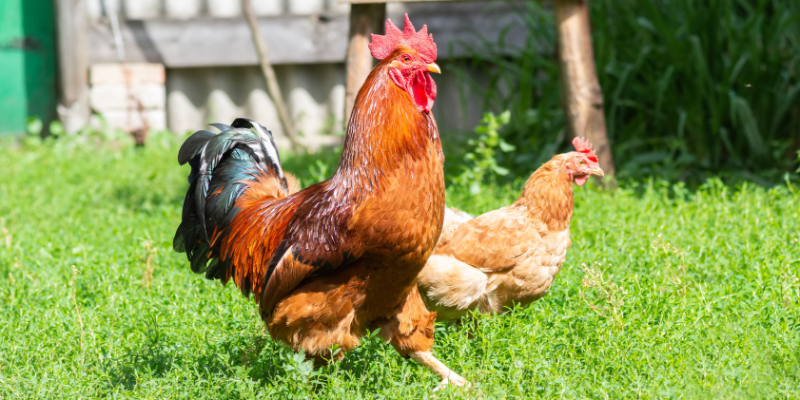
Roosters and cocks are strikingly beautiful birds – generally far more eye-catching than the hens. Beyond looks, a good rooster brings real benefits to flock harmony:
- He helps keep the peace. A rooster brings order to a flock by reinforcing the pecking order, which can reduce squabbling between hens. If you'd like to understand the social side better, see our guide on how flock hierarchy works with chickens.
- He's a watchful protector. Roosters are fiercely protective of 'their girls', calling out to warn the hens of ground and aerial predators, and often guarding the coop door until the flock is safely in for the night.
- He's a generous provider. Roosters find treats for their harem and share them by repeatedly picking up and dropping tasty morsels – behaviour known as 'tid-bitting'. It's adorable, and it marks him out as a great provider, a bit like asking someone out for dinner.
Cons of keeping a rooster: crowing, aggression and the legal side
The two biggest downsides of cockerels are the crowing and the occasional misplaced aggression – plus a few practical points worth checking before you commit.
Crowing: Some people love the sound; others find it hard to live with, especially early in the morning. Roosters don't only crow at dawn – they crow throughout the day.

Aggression: Aggression is worse in spring and summer, when testosterone is high and males compete with one another. A rooster may even perceive a person as a threat because of their larger size and dominance – even though no human has any intention of mating with the hens. Some breeds are notably gentle, such as Cochins, Brahmas and Orpingtons, while certain bantam breeds can be feistier – not surprising, given their small stature compared with most predators.

Noise rules, neighbours and the law: Before getting a cockerel, check your local council rules and any tenancy or allotment restrictions – many urban and suburban areas limit or ban roosters because of noise. It's also worth a friendly word with close neighbours. If keeping a male isn't an option for you, that's absolutely fine: your hens will be perfectly content without one.
Do hens get on without a rooster?
Yes – flocks of hens manage very well with or without a male. Without a rooster, one of the hens will often step up and take on a more dominant, look-out role, and the flock settles into its own pecking order quite naturally. The key is good security and a settled group. When you do add birds, introduce them carefully – our guide on how to introduce new hens to your flock walks you through it step by step.
If you can keep a suitable rooster, the advantages probably outweigh the disadvantages. If you can't – or you simply prefer a quieter, hens-only flock – the girls will thrive on their own, provided your setup keeps them safe.
Frequently asked questions
Do chickens need a rooster to lay eggs?
No. Hens lay eggs with or without a rooster. You only need a male if you want fertile eggs to hatch into chicks.
Are hens happier with or without a rooster?
It depends on the flock and your situation. A calm, well-matched rooster can add protection and structure, but a hens-only flock is just as content – especially where crowing would upset neighbours.
Can you eat fertilised eggs?
Yes. Fertilised eggs are completely safe to eat and look and taste the same as unfertilised ones, as long as you collect them regularly and keep them cool so they don't develop.
How many hens should you keep per rooster?
Keep as many hens as you reasonably can – and only one male per flock – so his attention is spread out and individual hens aren't over-mated.
Keep your flock safe, with or without a rooster
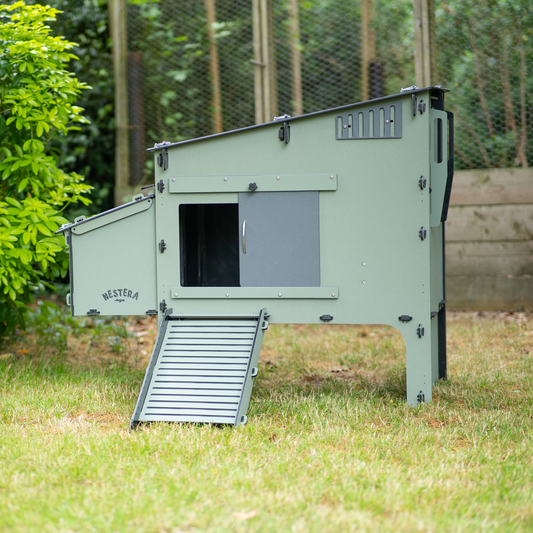
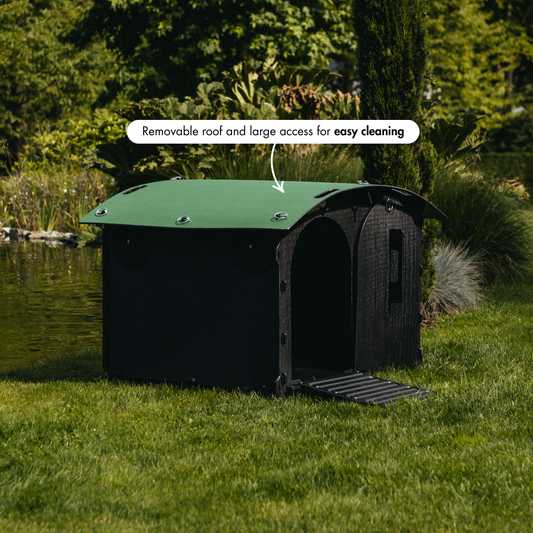
Whether or not you keep a cockerel, a secure home is what really keeps your hens happy and protected. Our easy-clean, predator-resistant recycled-plastic chicken coops give your flock a safe, comfortable base – with no timber cracks for red mites to hide in – so your hens can get on with doing what they do best, rooster or not.