Working out what size chicken coop you need comes down to one simple question: how many hens do you keep now, and how many might you keep in a year or two? Buy for today's flock alone and you'll likely outgrow your coop fast. This guide helps you match your flock to the right coop size, choose between a raised or ground-level house, and pick a Nestera model with a little room to grow.
Short answer: for most backyard keepers, allow one coop "place" per hen and choose the next size up so you have spare capacity. As a quick guide, a small coop suits 3–5 hens, a medium 5–9, and a large 8–15 — then add a generous run on top.
How to Choose the Right Coop Size for Your Flock
The number of birds you want is the starting point, but breed matters just as much. Bantams are compact, so you can comfortably keep a few more of them than large fowl such as the Brahma or Cochin, which need more headroom and floor area each. Before you buy, jot down your likely flock size, the breeds you have in mind, and whether you plan to add hens later.
A coop that's correctly sized keeps your flock calm, healthy and laying well. The aim is to avoid two opposite mistakes: cramming in too many birds, or buying a coop so cavernous your hens struggle to keep warm. We cover the exact welfare maths below, but if you want the full space-per-bird rules first, see our companion guide on how big a chicken coop should be.
What Size Coop for 4, 6 or 10 Chickens?
Here's a practical starting point when you're deciding what to buy. These figures assume large fowl and a coop used for roosting and laying, with daytime space provided by a run or free-ranging:
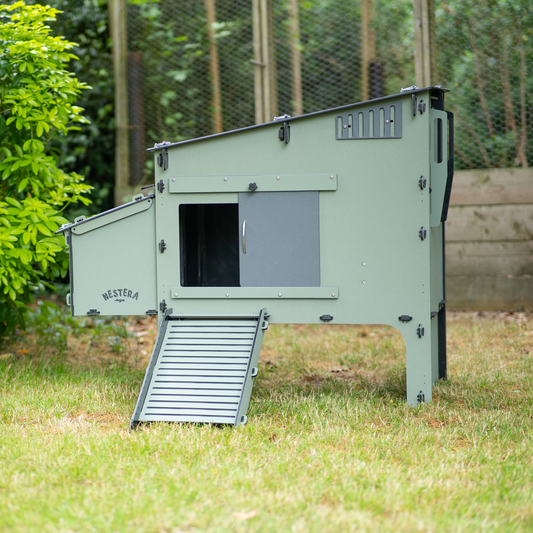
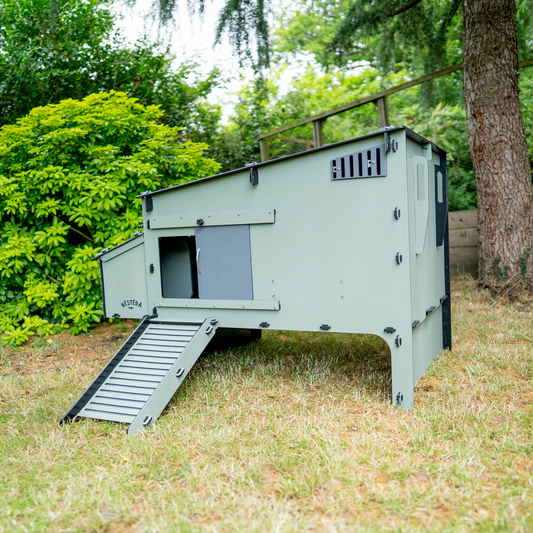
- What size coop for 3–5 chickens: a small house is plenty. Nestera's House and Lodge coop in size Small is rated for 3–5 hens.
- What size coop for 4 chickens: a Small coop comfortably fits four hens with room to add one or two more.
- What size coop for 6 chickens: step up to a Medium (5–9 hens), or choose the Aspen coop in its 6-hen size.
- What size coop for 8–10 chickens: go for a Large House/Lodge (8–15 hens) or the Aspen in its 10-hen size.
If your number sits right on the boundary between two sizes, choose the larger one. It costs a little more upfront but saves you replacing the whole coop when your flock grows.
Always Buy a Size Up: Plan for Flock Growth
Hen-keeping is famously moreish — most people add birds within a year or two. That's why you should always aim for a slightly larger house than the bare minimum for your current flock. A touch of spare space gives your hens room to settle and gives you the option to grow without buying again.
There is a limit, though. A coop that's far too big for a small flock can leave birds cold in winter, because their combined body heat isn't enough to take the chill off all that air. The sweet spot is "one size up", not "the biggest you can find".

Indoor Coop Space vs Run Space
It helps to think about two separate areas when sizing up. The coop is where hens roost overnight and lay — it needs enough perch length and floor area per bird, but it doesn't have to be huge. The run is where they spend their active daytime hours, and this is where extra space pays off most for happy, busy hens.
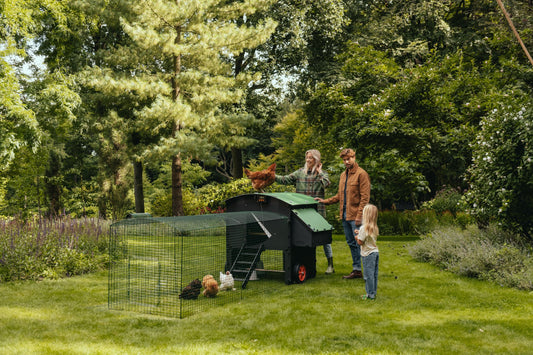
If your birds can't free-range all day, pair your coop with a generous covered run. Nestera runs attach to the coops and extend secure outdoor space — for example, the run for the large coop adds protected room to scratch, dust-bathe and forage. As a rule of thumb: size the coop for roosting, and be as generous as you can with the run.
Raised vs Ground-Level Coops
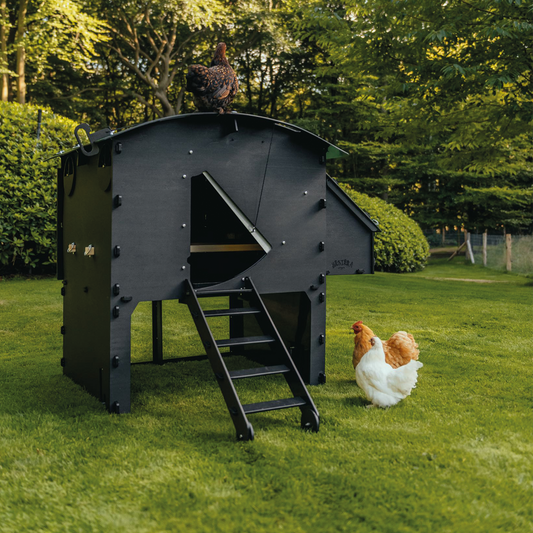
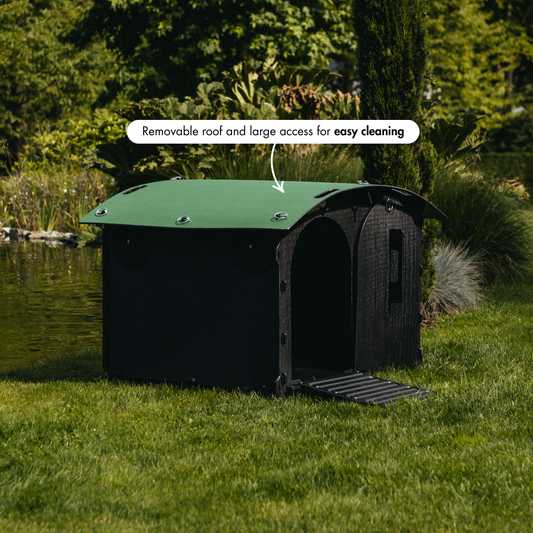
Coop height affects both your flock and your back. A raised coop lifts the house off the ground, which keeps the floor dry, creates shaded shelter underneath and makes the interior easier to reach at a comfortable height — handy at egg-collecting and cleaning time. Nestera's House and Lodge sit on legs for exactly this reason. Ground-level walk-in style setups suit larger flocks and keepers who want to step inside; the Aspen range works well here. Whichever you choose, easy access matters, because a coop you can clean quickly is a coop you'll actually keep clean.
Matching Flock Size to the Nestera Range
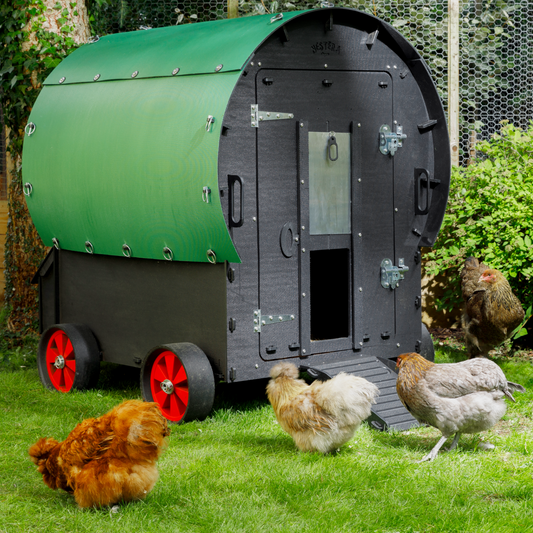
Every Nestera coop is made from around 70% recycled plastic, with smooth surfaces and multiple access points — and, crucially, no cracks or crevices where red mites can hide, unlike timber. They're guaranteed for up to 25 years depending on the model, so the coop you buy today will still be doing its job long after your flock has grown and changed.
- House & Lodge coop — choose Small (3–5 hens), Medium (5–9) or Large (8–15). Raised, easy-clean, and the best all-rounder for most gardens.
- Aspen coop — available for 6 or 10 hens, with a walk-in style design for keepers who want more room and step-in access.
- Coop runs — add secure daytime space to whichever coop you choose.
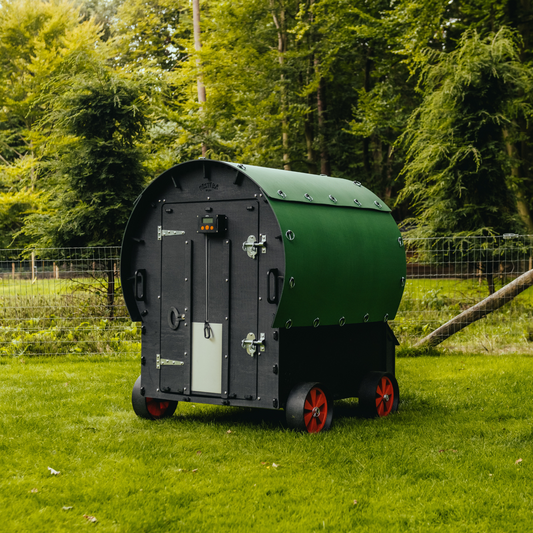
Thinking about an automatic pop-hole door too? The Automatic Door Opener fits the House and Lodge, while the solar Smart Auto Door is designed for the Aspen — so you can size your coop and automate it in one go.
The Welfare Maths: Headroom, Floor Area and Perch Length
If you want to check a coop against recognised welfare guidance, three measurements matter. (For the full space-per-bird rules and more detail, see how big a chicken coop should be.)
1. Headroom. Allow enough space above the perch for a bird to stand upright — roughly 200mm minimum, more for large breeds. Every Nestera coop, even the smallest, allows ample headroom above the perches.
2. Floor area. The Poultry Club of Great Britain suggests allowing 200 x 200mm (8 x 8") per bantam (around 25 birds per square metre) or 300 x 300mm (1 sq ft) per large fowl (around 11 birds per square metre). The Soil Association's higher welfare standard specifies a minimum of six large-fowl birds per square metre — 400 x 400mm each. These are minimum figures; the more floor area per bird, the better.

3. Perch length. The Soil Association recommends 180mm of perch per large fowl, the Poultry Club 200mm; we suggest using 200mm as your guide. Around 120mm is enough for bantams. More perch space is always better, as it lets a bullied bird move away. Where there's more than one perch, leave at least 150mm between them.
You can read both organisations' welfare guidance here: Poultry Club of Great Britain and Soil Association.
Frequently Asked Questions
What size chicken coop do I need for 6 chickens?
For six large-fowl hens, choose a medium coop such as Nestera's House & Lodge in Medium (5–9 hens) or the Aspen in its 6-hen size. If you keep bantams, or expect to add birds, the same coop gives you comfortable spare capacity.
Is it better to have a bigger or smaller coop?
Slightly bigger is better — buy one size up from your current flock so you have room to grow. Avoid going dramatically oversized for a small flock, though, as a near-empty coop can be harder for birds to keep warm in winter.
How many chickens fit in a Nestera coop?
The House & Lodge ranges from 3–5 hens (Small) to 8–15 (Large), and the Aspen comes in 6-hen and 10-hen sizes. Bantam keepers can usually keep a few more birds than these large-fowl ratings.
Do I need a run as well as a coop?
If your hens can't free-range safely all day, yes. The coop is for roosting and laying; the run gives them secure daytime space to forage and dust-bathe. Be as generous as you can with run size.
Ready to Choose Your Coop?
Match your flock to the right size, allow a little room to grow, and you'll have a coop that keeps your hens happy and healthy for years. Browse the easy-clean, 25-year-guaranteed Nestera chicken coop range to find the size that fits your flock — or step up to the walk-in Aspen if you're planning a larger flock.