What Is the Egg Song, and Why Do Hens Sing It — Even Without Laying?
The egg song is that loud, repetitive cackle your hens belt out before or after laying — and, confusingly, sometimes when they haven’t laid at all. If you keep chickens, you’ll know the sound well: a proud, carrying buck-buck-buck-BAGAWK that can echo across the garden. It’s one of the most charming (and occasionally noisiest) parts of flock life, and it tells you a lot about how your birds think and bond.
Short answer: the egg song is a natural vocalisation linked to laying and flock communication. Hens sing to announce a nest, rejoin the flock, protest over a favourite nest box, or simply join in with a flock mate — which is why you’ll sometimes hear it even when no egg appears.
Chickens make a whole range of vocalisations depending on their sex, breed, and situation. Amazingly, speaking and understanding this “language” is largely innate. Even if your birds hatched in an incubator and were reared in a shed, they’ll still use many of the same calls — and understand their meaning. They don’t learn these from a mother hen or other flock members, which is very different from how humans learn language.
Vocalisations vary, just as ours do. Chickens use soft, rhythmic, low tones to soothe themselves, their eggs, and their chicks, but switch to loud, high alarm calls if they spot a predator. We’re much the same: we hum and use sing-song voices with our children, yet shout if we think they’re in danger. Both humans and chickens chatter amongst themselves most of the time to share information and bond with friends and family.
Despite recent attention on flock vocalisations — particularly in commercial flocks — there is almost no formal research into egg songs. An egg song is an extended vocalisation made by hens for a number of reasons. It was long assumed these sounds were made only just before or after laying, but it seems to be far more complex. Hens sing several different “songs”, each meaning something different even though they sound similar. Here are the leading theories for why you hear your hen being more vocal than usual.
Announcing the Perfect Nest Site
Chickens are sociable birds that generally like to lay their eggs together in communal nests. Smaller flocks with strong bonds are especially known for this — one reason we design our nest boxes with removable dividers so hens can share or separate as they please.
Laying an egg is a big deal! Hens want somewhere they feel safe, knowing their egg and any potential offspring will be protected. Hens often incubate a clutch laid by several hens, so announcing the discovery of a great nest site saves the rest of the flock time and effort — and helps keep all the precious eggs together. That broadcast is one of the most common reasons hens sing.
Shift It, Mrs! When a Hen Wants Her Favourite Nest Box
Hens are creatures of habit and usually choose to lay in the same place every day. If another hen is occupying their favoured spot, they’ll be extremely irritated — and the “song” you hear is more than likely a list of avian expletives directed at their flock mate! Squabbles over a popular nest box are a frequent trigger for loud cackling, even before anyone has laid a thing.
I’m in the Club! Why New Layers Are the Noisiest
Being a bird large and mature enough to lay an egg is an achievement worth shouting about. Laying is a particular rite of passage in a flock and helps hens climb the social ladder, which is why new layers tend to be the noisiest of all. A young hen finding her voice may sing long after she’s left the nest — another reason you might hear the egg song without a fresh egg to show for it. The pecking order shapes a lot of this behaviour, as we explain in how flock hierarchy works with chickens.
Calling the Cockerel: A Distraction Away From the Nest

Wild jungle fowl in Asia have been closely observed over many years. Each flock typically consists of several females and a dominant male. After a hen has laid an egg in a remote, predator-safe nest, she will call for the cock bird to escort her back to the others. On the flip side, hens sitting on the nest incubating eggs won’t want male attention and will cluck in an agitated way — her “music” changes again when she’s feeling more receptive to his advances.
Predator Protection: A Decoy Call
It’s unusual for a hen to sing while laying; it’s most common just after. One theory suggests the singing draws predators towards the hen and away from the hidden nest of precious eggs — a decoy call. From an evolutionary standpoint, it makes sense. A chorus of egg songs from several birds may also intimidate predators and improve synchronicity and bonding within the flock. This is also why the egg song can feel “contagious”: one hen starts, and the rest join in.

Some keepers worry their hens are in pain when laying, comparing it to human childbirth. It’s impossible to know exactly what another animal is feeling, but there are interesting studies in which corticosterone levels (which indicate stress) have been measured. Hens’ bodies are well adapted to laying standard-sized eggs regularly, and it seems this doesn’t stress them too much. Larger eggs are more likely to cause discomfort, however. Pay attention to any hen walking around in a penguin stance with her tail down: this can be a sign she is egg-bound, and if you’re worried it’s always best to consult your vet or a qualified poultry specialist.
Is the Egg Song a Problem? Noise, Neighbours, and Coops
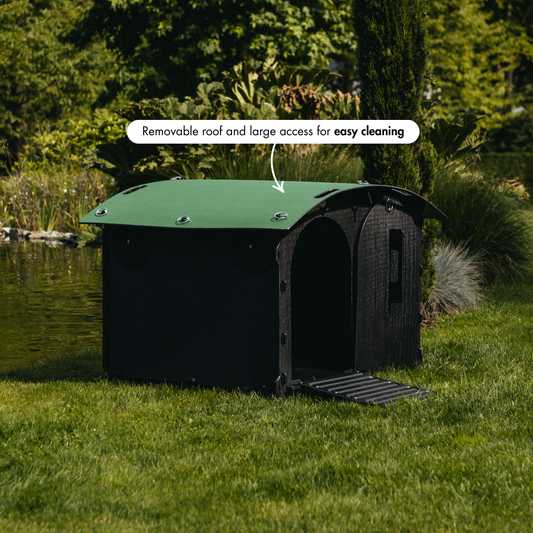
For most keepers, the egg song is a happy, healthy sign of a contented flock rather than a problem. It’s usually short-lived — a few minutes of triumphant cackling that fades once the hen rejoins the others. If you have close neighbours, though, a chorus of layers can carry. You can’t (and shouldn’t try to) stop a natural behaviour, but you can reduce stress-driven squabbling by giving hens plenty of nest boxes, a calm routine, and a secure, comfortable place to lay. A well-designed coop helps: our easy-clean recycled-plastic chicken coops have multiple nest spaces and no cracks for red mites, so hens feel safe and settled when it’s time to lay.
Egg Song FAQs
Why do chickens sing after laying an egg?
Most likely to announce that the job is done, rejoin and reassure the flock, and possibly to draw predators away from the hidden nest. New layers are especially vocal because laying helps them climb the social ladder.
Do chickens sing without laying an egg?
Yes. Hens often sing when they’re squabbling over a favourite nest box, joining in with a noisy flock mate (the egg song can be contagious), or simply feeling chatty. A song doesn’t guarantee a fresh egg.
Do roosters or only hens sing the egg song?
The egg song is a hen behaviour tied to laying and flock communication. Cockerels have their own calls — including crowing — but they don’t sing the egg song.
Is the egg song a sign my hen is in pain?
Usually not — it’s a normal, often triumphant vocalisation. If a hen seems distressed, stands in a penguin stance with her tail down, or strains for a long time, she could be egg-bound; speak to your vet or a qualified poultry specialist.
Give Your Hens a Calm, Safe Place to Lay
The egg song is one of the simple joys of keeping chickens — a window into how your flock thinks, bonds, and communicates. The happier and more secure your hens feel, the more relaxed their laying routine will be. Explore Nestera’s recycled-plastic chicken coops, designed with roomy, easy-clean nest boxes that give your layers somewhere safe to sing about. For more on laying behaviour, see all your laying questions answered.